Uncertainty has become a defining feature of the current operating environment. Global politics, domestic and international climate conditions, and volatile commodity markets are all creating genuine pressure and raising reasonable questions about strategy in agribusiness.
When we strip it back, there are really only two choices in how we respond.
#1 External focus.
The first choice is an external approach. This is where we spend our time wishing that things were different: cheaper fuel, lower fertiliser prices, more predictable seasons, stronger markets. We look for someone or something to blame and quietly hope that somebody else will fix it.
Stephen Covey describes this as operating in our circle of concern. The challenge is that many of the things worrying us most are completely outside our control. When we stay focused there, it can leave us feeling frustrated, reactive, and stuck.
#2 Internal focus
The second choice is to accept our current reality and look for opportunity.
The second choice is to deliberately shift our focus into our circle of influence.
Acceptance doesn’t mean liking the situation or pretending it’s easy. It simply means acknowledging the cards we’ve been dealt — much like accepting a dry year for what it is. Once we do that, our energy can shift from frustration to progress.
Looking for a breakthrough
A powerful way to approach challenging conditions is to actively look for a breakthrough in the business.
A breakthrough is not a marginal gain or a minor tweak. It is a permanent and meaningful step change in performance, which is often ten times more impactful than the decisions we might make in a “normal” year. Importantly, breakthroughs are often not obvious at first and can come from questioning long-held assumptions.
As Winston Churchill famously said, “The pessimist sees difficulty in every opportunity; the optimist sees opportunity in every difficulty.”
Putting this into practice
So what might that look like in practice?
High input prices, tighter margins, and market corrections force us to ask better questions. If current settings no longer deliver the returns they once did, then doing “more of the same” is unlikely to be the answer. These conditions challenge us to rethink strategy, structure, and systems.
Recently, I’ve been working through a lot of gross margin and business analysis with clients. These conversations are some of the most valuable work we do together. When we take the time to properly explore their real situation, options emerge. Some ideas are quickly ruled out. Others prove to be worth deeper investigation and, in some cases, implementation. That process itself is incredibly powerful.
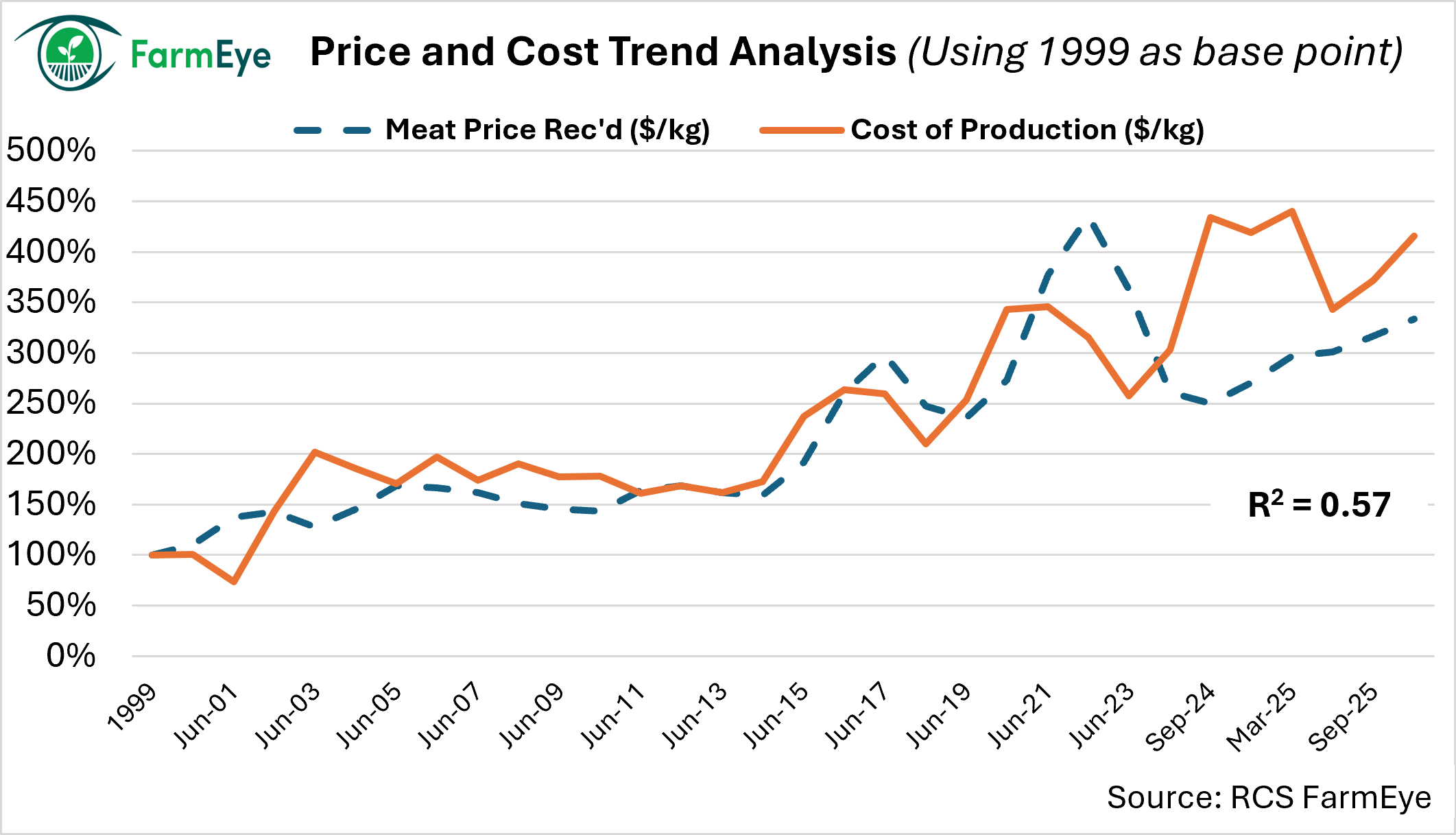
Running the numbers and stress-testing decisions has never been more important. A good example is a recent discussion with a client questioning whether feeding lick was still economical given price increases of around 50%. When we stepped back and did the analysis, it was clear that, in their situation, it still stacked up. While input prices had risen, cattle prices over the past decade had increased by far more. Understanding those relationships matters. By comparison, the relationship if growing cereals is a very different one at the moment that requires us to really dig into and discuss the real options available.
We also need to know our breakpoints. Concepts like the law of diminishing returns we teach in the Grazing for Profit School are critical right now. This means identifying the level of inputs where an extra dollar spent stops delivering an extra dollar back.
Monitor your mindset
The risk in tough times is slipping into fear or a victim mindset. The opportunity is choosing to get on the front foot: challenging thinking, testing assumptions, and actively looking for breakthroughs. Build yourself a more resilient, profitable business that you still enjoy being part of, whatever the future brings.