Ben Simpson is a grazier and RCS coach based in Central Western Queensland. Together with his wife, Kim, Ben operates Thistlebank, a

Across Central Queensland, grazing families are building more resilient businesses and healthier landscapes with the support of RCS coaching. From on-property visits to group learning and online sessions, RCS equips producers with practical tools to increase productivity and profitability while caring for the land.
Launched in January 2025, the Queensland Government funded PioneerPlus project has provided 16 grazing businesses with exclusive access to RCS’s full range of programs, tools and guidance. Together, they’re creating momentum and measurable change.

Graziers in PioneerPlus are already making tangible progress. With guidance from experienced RCS Coach Katlin Tilly, participants received a full day on-property visit to evaluate their land, livestock and business. These sessions dug deep – literally – into practical ways to improve management.
During these sessions, graziers rolled up their sleeves to:
Many have since installed new fencing and watering points to improve pasture rest and grazing rotation. All participants are now working on accurate stock flows and grazing charts to better match stocking rates with carrying capacity.
For Patrick and Melina Clancy from ‘Seven Hills’, who bought their property 2.5 years ago, the changes have been transformative. By adjusting how they manage paddocks over the non-growing season, they’ve increased feed quality and improved cattle performance.
The results speak for themselves. “Our cattle condition has held on really well and we’ve been able to wean much later,” says Patrick. “The year before we weaned at 6 months and they were too little to yearling mate. This year, some of our little heifers were nearly 10 months old and 300kg when we weaned them.”
RCS’s support doesn’t stop at the paddock gate. Through the Next Steps coaching program and remote one-on-one sessions, graziers receive ongoing personalised support to improve their farm management. Meanwhile, Keep in Touch (KIT) Days, webinars and other group events create opportunities to connect, share experiences and stay motivated.
Recent webinars have highlighted real-world strategies from RCS coaches and clients. Wirra Pastoral Company shared how they make time to “Work On The Business” (WOTB) through strategic business management meetings, while Ben Simpson from Thistlebank Grazing explained how feed budgeting and accurate grazing charts turned seasonal uncertainty into market opportunity.
For Patrick and Melina, these sessions have been invaluable. “Ben’s webinar was phenomenal,” says Melina. “We had our second one-on-one remote coaching with Katlin the day after. There were so many things that got brought up in the webinar that we could ask Katlin straight away and act on them. Those real-life stories cement everything. It wasn’t until then that I went back to our grazing charts and updated them.”
This reflection revealed their stocking rate had already exceeded their benchmark carrying capacity – a crucial insight that enabled them to plan timely corrections with Katlin’s guidance.
RCS also helps graziers see the bigger picture across their landscape. Land assessments have identified areas needing attention, from erosion to invasive plants and low-succession grasses. Collectively, participants’ changes are estimated to save 23 tonnes of valuable soil getting into waterways each year – a win for the land and the Reef.
RCS coaching builds more than grazing charts and spreadsheets – it grows confidence in business and land management. Participants are setting clearer goals, implementing real changes and building habits for long-term success.
Time management has been a major focus, helping graziers gain a better overview of their businesses. Many report improvements in mental health, feeling more in control, less stressed and better equipped to balance workloads with wellbeing.
For Melina and Patrick, the changes have reshaped how they run their business. As Melina explains, “Pat’s never done any of the economics – it’s great that he’s now involved and has an idea about that side of the business.” Together, they’ve separated their farm business from off-farm income, giving clearer insights into livestock performance.
This collaborative approach to business management has opened new conversations. “The first webinar about holding WOTB meetings prompted us to sit down and have another chat about where things were at. We would never have done that before,” adds Melina.
Feed budgeting tools have been a game-changer for the Clancys. “First and foremost, learning the feed budgeting tools has been massive for us,” says Melina. They’re now maintaining accurate stock flows and grazing charts for the first time.
Looking ahead, Patrick and Melina are excited to continue learning through RCS courses and programs like ExecutiveLink®. “We’re pretty excited that the journey doesn’t stop. We can keep doing RCS courses for the next 20 years and continue to be educated,” says Melina.
Their advice to others? “Don’t wait, do it now. If we’d done the Grazing for Profit® course the first year we bought the farm, we’d be 2.5 years ahead of where we are now.”
If you’re looking to make similar improvements on your property, RCS offers a range of services:
For Queensland producers, you can also apply for a RCS Rural Profit Scholarship, worth over $30,000 in training, coaching and business tools, including access to the renowned Grazing for Profit® School. Thanks to a partnership with ACCIONA Energía, limited scholarships are now available. Applications for the 2026 intake close 30 September 2025. To find out more, visit the RCS Rural Profit Scholarship webpage.
With RCS, practical support, expert guidance and a strong peer network are always within reach – helping graziers turn knowledge into action and build businesses that thrive for the long term.
_________________________
PioneerPlus is delivered by RCS Australia and funded by the $6 million Grazing Practice Change Program through the Queensland Government’s Queensland Reef Water Quality Program. For more information, visit the Reef Program website.

Ben Simpson is a grazier and RCS coach based in Central Western Queensland. Together with his wife, Kim, Ben operates Thistlebank, a

Richard and his wife, Bernadette, run Stoneridge, a fourth-generation family grazing business near Young in South West NSW, where they raise sheep

David explains what unpaid labour really means and why it matters when calculating the true profitability of a business. He also explores the implications for cashflow, business continuity and succession when a business cannot afford the true cost of labour.
No plan survives first contact with reality—but successful businesses do. In this article, RCS Advisor David McLean explores why planning is only the first step, and how monitoring conditions and adapting decisions are essential for profitability. Discover practical insights to help you respond confidently to seasonal, market and operational challenges while keeping your business on track.
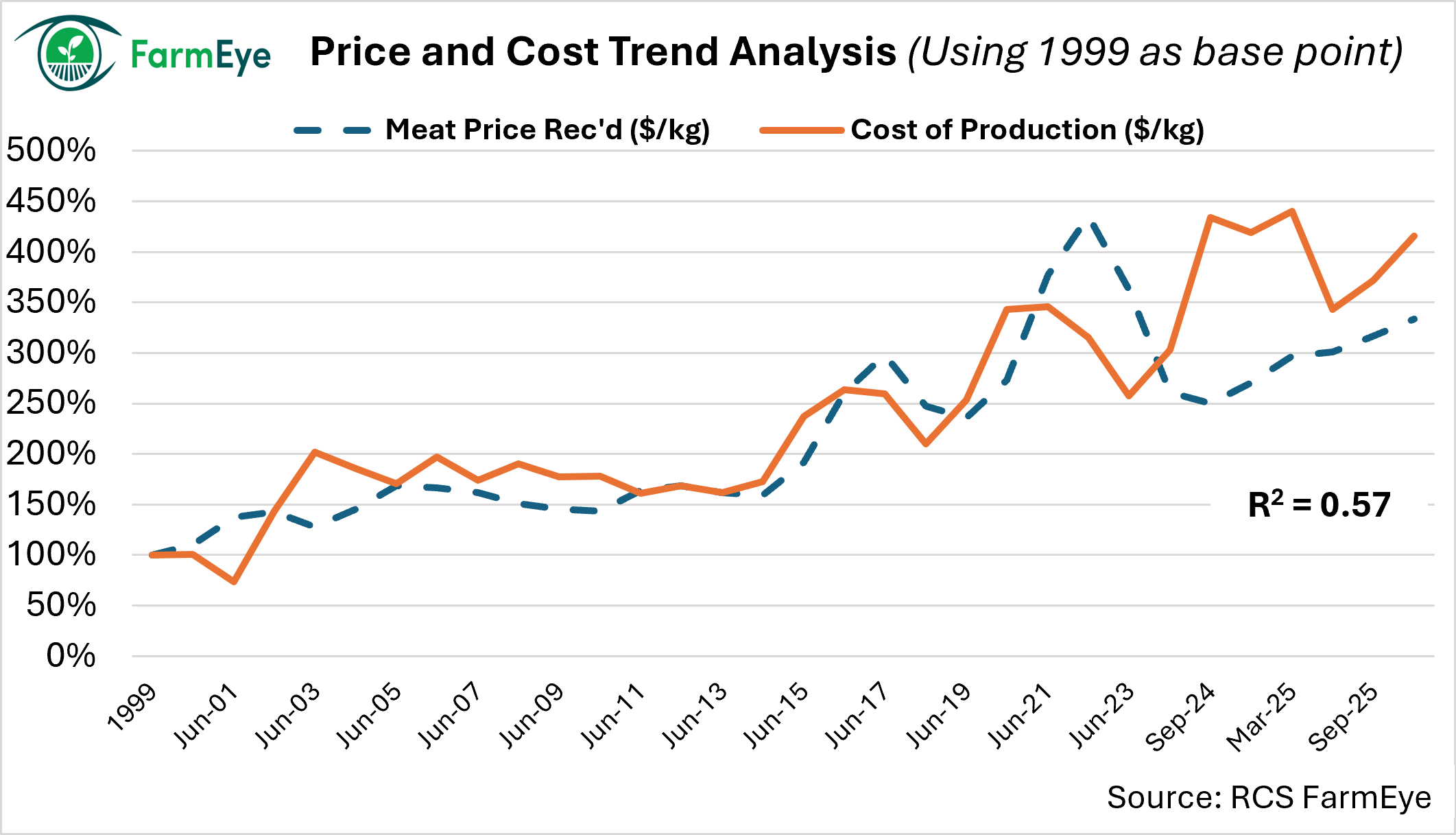
Profit doesn’t happen by accident—it comes from making deliberate decisions and regularly checking whether those decisions are delivering the results you want. In this article, RCS explores why quarterly profit planning meetings should be a priority for every farming and grazing business, and how using Cost of Production, benchmarking and focused business discussions can turn financial information into practical decisions that strengthen profitability and resilience.